
Kennedy Hall: “The Formula That Failed: Why Tucho’s Note Does Not Excommunicate You”
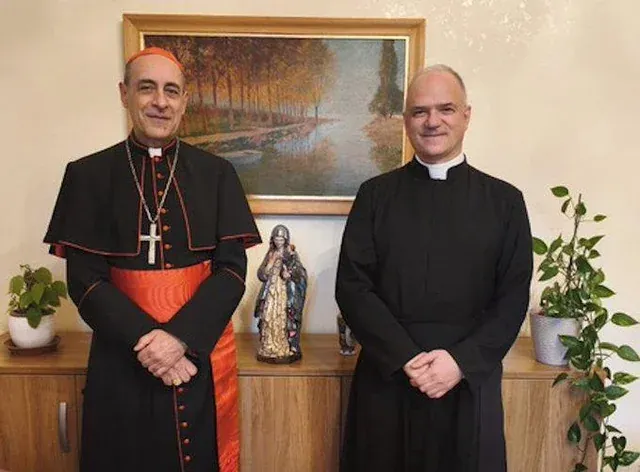
On July 2, 2026, the Dicastery for the Doctrine of the Faith released two documents concerning the previous day’s episcopal consecrations by the Society of Saint Pius X (SSPX): a Decree and an accompanying Explanatory Note (Note). Commentary since has treated the two as a single act, as though the DDF had excommunicated six bishops, seven hundred priests, and an unknown number of laity in one stroke. It did not.
Continue reading Kennedy Hall’s Substack Article here: https://meretradition.substack.com/p/the-formula-that-failed-why-tuchos
Passiontide & Easter Latin Mass Schedule
Attached below are the currently known Charlotte metro area Latin Mass times for the remaining days of Lent inclusive of Easter Triduum and Easter Sunday.
Note: There are currently only two Latin Mass chapels in the Charlotte metro area. Neither of these chapels normally offers daily Mass. The schedules below focus only on the dates when Masses or other significant events are offered (such as Stations of the Cross on Fridays in Lent), typically omitting Mondays-Thursday.
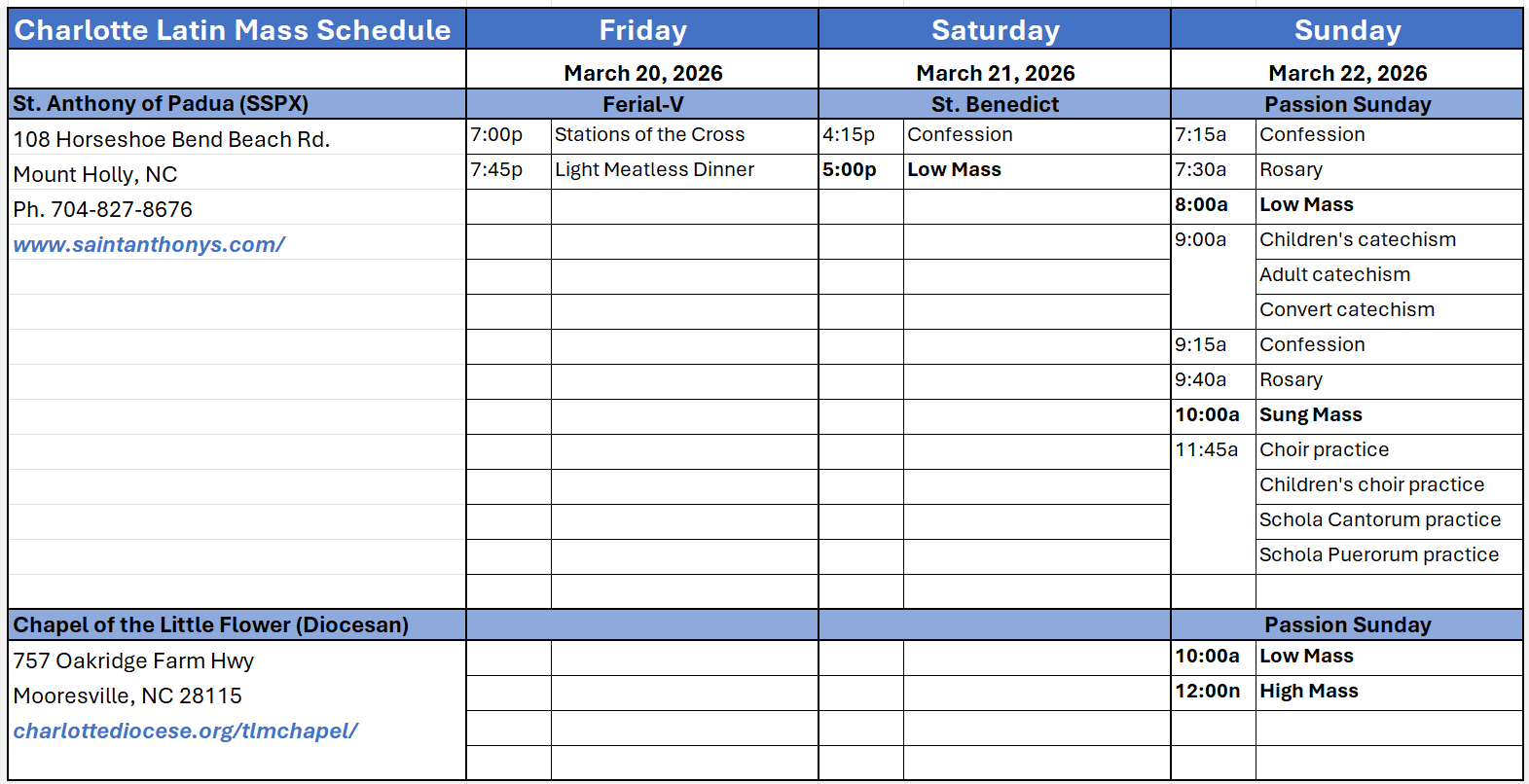
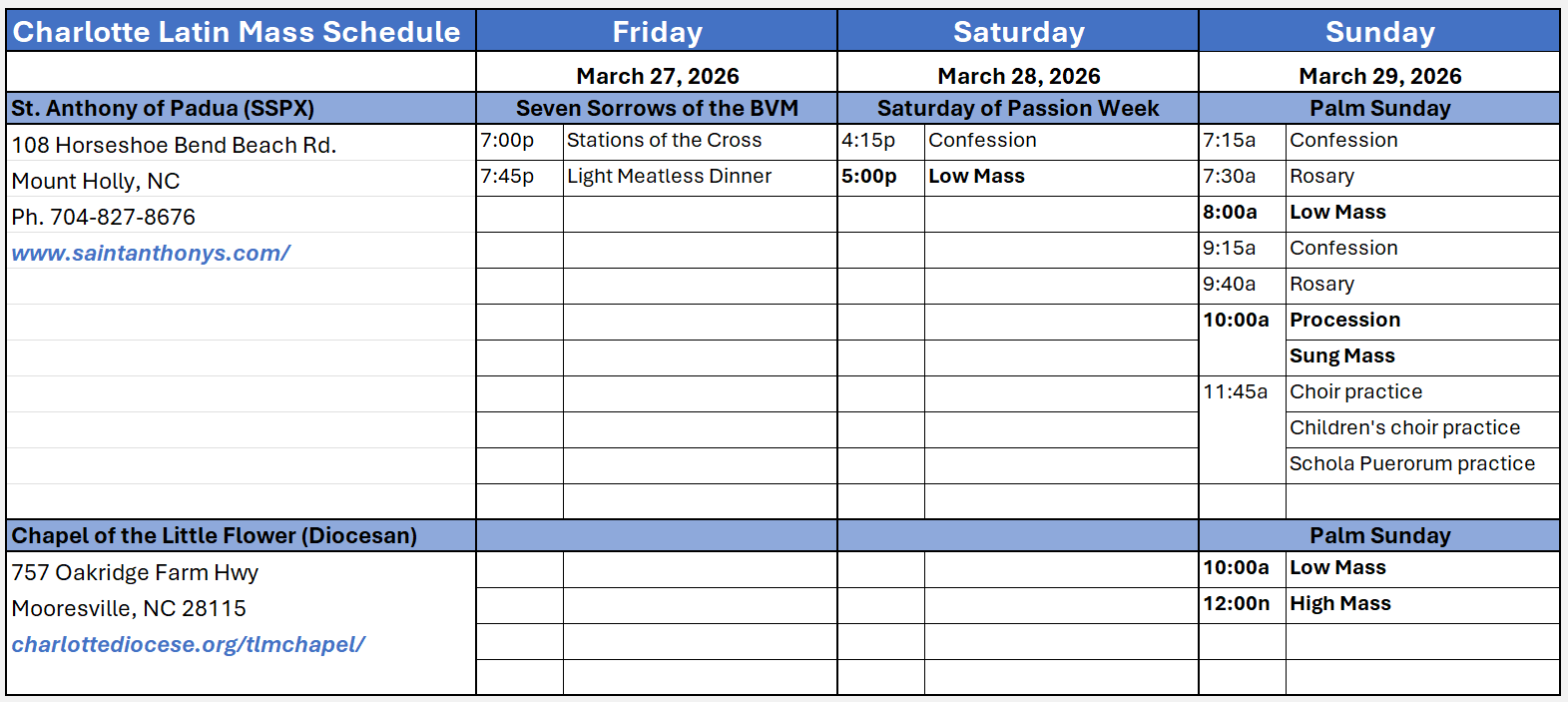
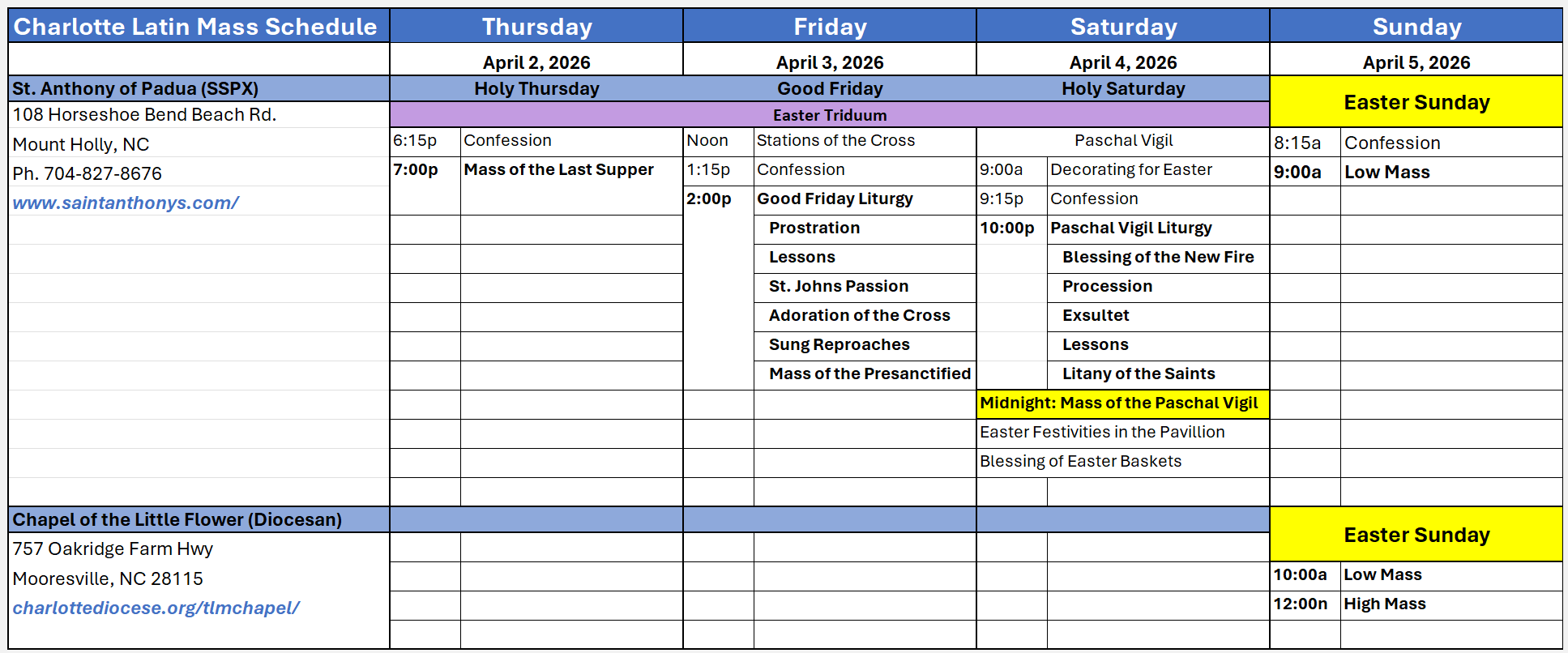
For more up to date information please refer to the chapel websites:
– St. Anthony of Padua (SSPX): www.saintanthonys.com/
– Chapel of the Little Flower (Diocesan): charlottediocese.org/tlmchapel/
Regarding the SSPX, some may still have difficulty considering fulfilling their Sunday Mass Obligation at Chapels of the SSPX. We cover that topic on our website: What about the SSPX? Also keep in mind that Stations of the Cross and Easter Triduum and Easter Festivities have nothing to do with Sunday Mass Obligations. The SSPX may have an irregular canonical status, but their parties do not.
More importantly, since the SSPX chapel will be the only chapel in the Charlotte area this year offering the traditional Easter Triduum liturgies, please note that St. Anthony’s is a small chapel and it will be crowded. Please come with a spirit of charity and patience. If you wish the chapel were larger, the proper way to express that is to consider making a large donation within your means to help them accommodate the faithful in future years.
Commemoration of All Souls: Monday, Nov 3rd
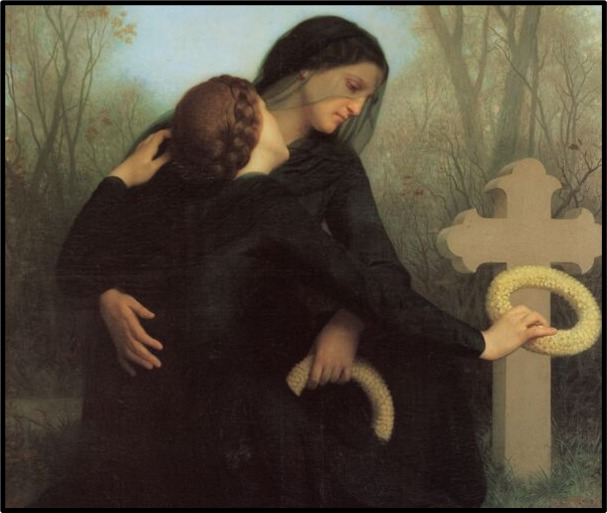
Painting: Le Jour des Morts, 1859 by William-Adolphe Bouguereau.
Since this year, All Souls Day (Nov 2nd) fell on a Sunday, the Commemoration in the traditional liturgical calendar is transferred to today, Monday, November 3rd.
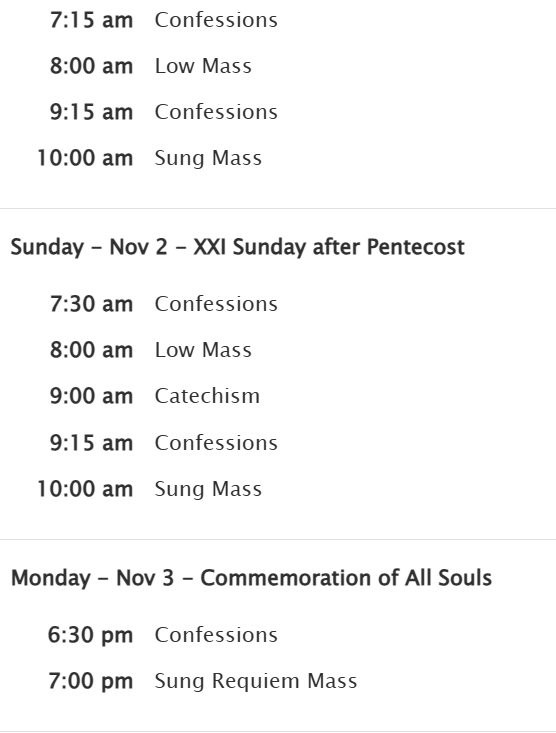
Saint Anthony of Padua Catholic Church in Mount Holly, North Carolina will offer the only traditional Requiem Mass in the Charlotte area that has been publicly announced.
6:30 pm Confessions
7:00 pm Sung Requiem Mass
Mass times for All Saints Day and All Souls Day
Attached below are the Mass times at St Anthony of Padua for this weekend including two Masses (8am & 10am) for All Saints Day on Saturday and a Sung Requiem (7pm) for All Souls on Monday evening. (Note: There will not be any Masses at the Mooresville Chapel on either Saturday or Monday.)
Hypothetically, What if Lefebvre Had Caved?
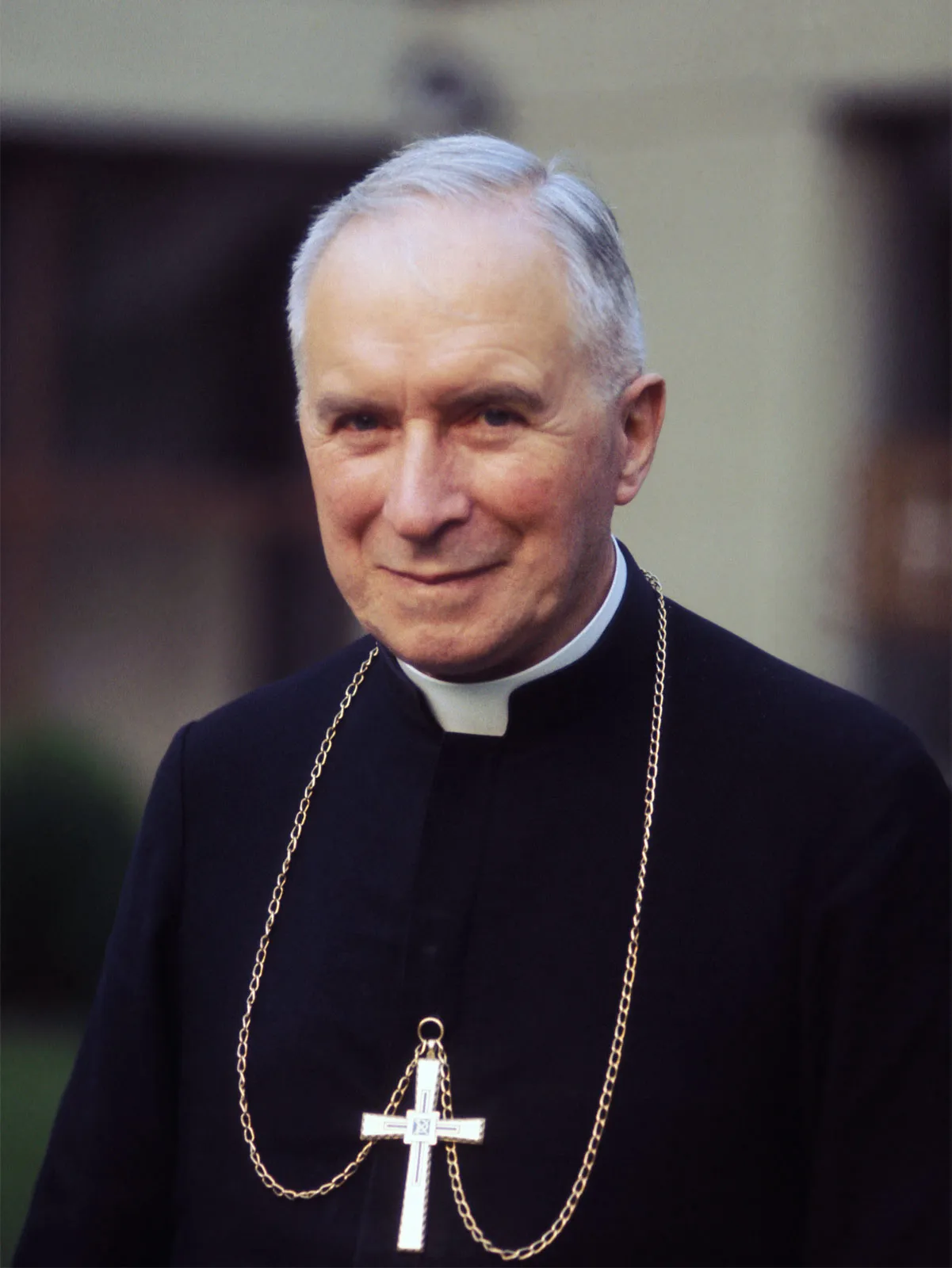
By Chris Lauer & his AI Chatbots
In Frank Capra’s 1946 film, “It’s a Wonderful Life,” George Bailey sacrifices his plans for a life of adventure to help the people in his hometown of Bedford Falls. After years of toil and faced with a crisis, George suffers a breakdown and wishes that he had never been born. The film creatively reimagines such an alternative world with all of its surprising ripple effects.
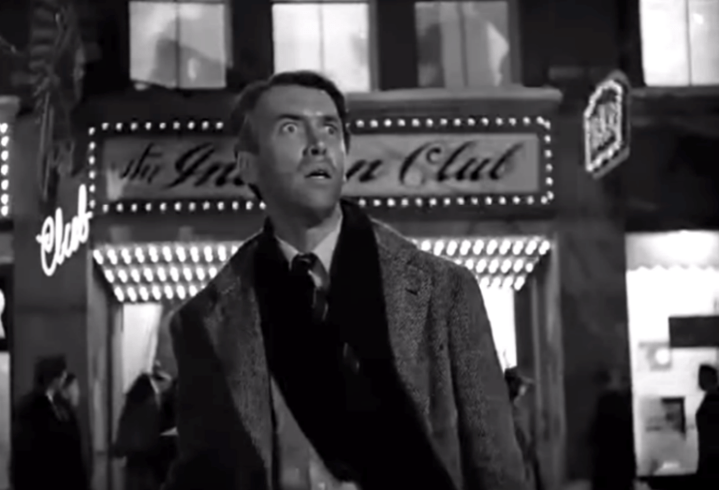
In a similar hypothetical thought experiment, I asked a few AI models to help reimagine the Catholic world today, if instead of standing firm in 1970, Archbishop Lefebvre had “caved in” to pressure and accepted the novelties of the “Spirit of Vatican II.” The results were shocking but not surprising. The “reimagined Catholic Church” generated by these AI models was hardly recognizable to what we have today—I might add, perhaps even more grim than a Bedford Falls without George Bailey.
The survival of the Traditional Roman Rite (or Latin Mass) can be at least partially credited to the fact that it has been continuously celebrated every hour of every day for centuries. Church historians have dated major components of this Traditional Mass back to the early Church fathers. According to these AI models, if Archbishop Marcel Lefebvre in 1970 had “caved in” and “obediently” accepted the post-conciliar novelties, the Traditional Roman Rite would likely have been abrogated and suppressed; Church Doctrines would have been eroded; traditional Catholic devotions would have faded to near extinction; and the organized traditionalist movement as it exists today would never have formed.
Unlike democratic institutions, the Catholic Church has powerful disciplinary tools at its disposal to force universal compliance and suppress opposition. These disciplinary tools (Keys to the Kingdom) were granted by Christ himself for the defense and preservation of the faith as opposed to its destruction, but that is beside the point. Without the faithful resistance of Archbishop Lefebvre, the Church would have been emboldened to exercise much stronger measures to suppress resistance. These AI models estimate that, given the intricate nature of the Traditional Latin Mass and its reliance on continuous celebration and traditional priestly formation, even a brief cessation would make its restoration difficult. After 50 years of suppression, the AI models estimated the odds of restoration at 5 percent. After 100 years, the odds fell to less than 1 percent. As the nursery rhyme goes, “All the king’s horses and all the king’s men,” might not have been able to put this ancient liturgy back together again.
We shouldn’t assume that the damage would be limited to liturgy. As the late (and notorious liberal) Cardinal Godfried Danneels of Brussels complained after Summorum Pontificum was released, he didn’t have an issue with the traditional liturgy itself, but that “the (Traditional Roman) Rite is only the locomotive—the issue is the carriages that are pulled behind it. Behind this locomotive are carriages that I don’t want.” The real target in this struggle has always been the doctrine and the faith itself.
According to these AI models, the hypothetical consequences of this scenario include:
- No “Indult” Communities: The survival of the Traditional Roman Rite today is widely attributed to the pressure applied by Archbishop Lefebvre and the Society of Saint Pius X (SSPX). Without this resistance, there would have been no need for Roman authorities to make concessions for the older rite. Papal indults like Pope Paul’s “Agatha Christie Indult” (1971) and John Paul II’s Quattuor Abhinc Annos (1984) and Ecclesia Dei (1988), issued in response to the SSPX refusing to adopt changes to the Church’s teaching and rituals, would have no need to be issued. Well-known indult Latin Mass communities in London, Wales, Paris, Rome, New York City, Saint Louis, Chicago, and even Old Saint Mary’s in Washington, DC, (to name a few) would never have been permitted.
- No “Ecclesia Dei” Communities: As noted, without the 1988 Apostolic Letter, Ecclesia Dei adflicta, the various “canonically-regular” traditionalist orders and communities that formed and were recognized by the Vatican in response to the SSPX’s actions would not likely exist. What motivation would the Church have to restore an abrogated liturgy 18 years later? The Priestly Fraternity of Saint Peter (FSSP; 1988), Institute of Christ the King Sovereign Priest (ICKSP; 1990), The Personal Apostolic Administration of Saint John Mary Vianney within the Diocese of Campos in Brazil (Bishop Antônio de Castro Mayer, 2002), Institute of the Good Shepherd (IBP; 2006), Institute of Saint Philip Neri (ISPN; 2003), Canons Regular of Saint John Cantius (SJC; 1998), Canons Regular of the New Jerusalem (CRNJ; 2002), Canons Regular of Saint Thomas Aquinas (2012), Congregation of the Sons of the Most Holy Redeemer (FSSR; 1988), Fraternity of Saint Thomas Becket (1988), Missionary Society of Divine Mercy (SMMD; 2005), Clear Creek Abbey (Benedictines; 1999), Le Barroux Abbey (Benedictines; regularized post-1988) would all be gone.
- No Summorum Pontificum or Universae Ecclesia: The Apostolic Letters, Summorum Pontificum (2007) and Universae Ecclesia (2011), issued by Pope Benedict XVI, granted priests universal permission to celebrate the Traditional Roman Rite, and gave lay associations of the faithful canonical mechanisms for requesting these Masses. Summorum Pontificum in particular was issued along with the lifting of the excommunications as a sign of good faith in response to requests made (2000-2001) by the SSPX during reconciliation negotiations with Cardinal Darío Castrillón Hoyos (head of the Pontifical Commission Ecclesia Dei). By 2020, thousands of diocesan priests worldwide, including dozens of priests here in the Diocese of Charlotte, were taking advantage of these permissions. Without the SSPX these documents would never have been issued. Without these Apostolic Letters, diocesan Latin Mass communities, like we have in Charlotte, would not exist. Without the canonical framework established in Universae Ecclesia, the petitions from the laity would never have been gathered, submitted, appealed or subsequently granted.
- Collapse of Traditional Doctrine: The SSPX was founded specifically to preserve traditional formation of priests. Without this priestly formation, the liberal/modernist theological trends that de-emphasized doctrinal fidelity would have become even more dominant. The 2019 Pew Study found that 69 percent of Catholics no longer believed in the Catholic doctrine of transubstantiation. The AI models concluded that it is safe to assume that belief in this doctrine would have eroded much further without the actions of Archbishop Lefebvre. This is likewise true of Catholic doctrines on sacraments, salvation, grace, redemption, the virgin birth, purgatory, and sin. The traditional understanding of the Mass as a true sacrifice, which Lefebvre felt was weakened by the New Mass’s ambiguous language, would have faded from popular consciousness more quickly.
- Elimination of Sacred Music and Gregorian Chant: Without Archbishop Lefebvre’s resistance and the traditionalist movement, the preservation and practice of sacred music, particularly Gregorian chant, would have faced near-total erosion in the Catholic Church. The SSPX, Ecclesia Dei communities, and diocesan Traditional Latin Mass parishes have been vital in maintaining Gregorian chant and polyphony, which are integral to the traditional liturgical ethos. These communities trained choirs, and preserved chant books like the Graduale Romanum and Liber Usualis. In a Church dominated by the Novus Ordo without traditionalist influence, contemporary and vernacular music (e.g., folk or pop styles) would likely have supplanted chant entirely, as seen in many post-Vatican II parishes. Seminaries, lacking traditional formation, would not teach chant’s complex notation or Latin texts, and monasteries like Solesmes, which revived chant in the 19th century, might have abandoned it under modernist pressure. By 2025, Gregorian chant would likely survive only as an academic artifact in secular conservatories or rare recordings, with minimal liturgical use, severing its role as the Church’s sacred musical heritage.
- Erosion of Traditional Devotions: Practices like the daily recitation of the Rosary, fasting & abstinence, Eucharistic Processions, the Brown Scapular, Eucharistic Adoration, Marion Devotions, Ember Days, Rogation Days, and other traditional devotions, which were maintained within traditionalist communities, would have likely continued their abrupt decline within the wider Church without a visible counter-movement emphasizing their importance.
- Impact on Priests, Religious, and Convents: The traditionalist movement, led by Archbishop Lefebvre, has fostered vocations across the SSPX, Ecclesia Dei communities, other religious orders, and diocesan programs. These gains sharply contrast with the declining vocations in the broader mainstream Church. If Archbishop Lefebvre had “caved,” these men and women with a strong desire for traditional formation and liturgy would likely not have had an outlet within the Church. Many more priests would have left the priesthood or religious life, or not entered at all, contributing further to the overall decline in vocations. Existing convents that wished to maintain their habits, rituals, and beliefs would have been suppressed and forced to adapt. The rapidly expanding traditional convents and religious houses, which are a feature of the current landscape, would not have been permitted.
I am sure I could have pressed further on other matters such as Church architecture, communion on the hand, and liturgical dancing, but I think we get the point. In essence, Archbishop Lefebvre’s faithful disobedience served as the catalyst and anchor for the entire traditional Catholic ecosystem within the modern Roman Catholic Church. Without this traditional resistance, the prevailing forces pushing for the most radical extremes of the “Spirit of Vatican II” would have ravaged the liturgical patrimony and sacred deposit of the Faith of the Church.
Of course, all of this is speculation of a hypothetical AI prompt. I am sure others could train AI models to generate different results. With every path chosen, one can never be certain of the path not chosen. For us locally, consider the leaked “liturgical guidelines memo” drafted by Bishop Michael Martin of Charlotte back in May of this year. With this memo, which some are still expecting to be released at some point, this reimagined Catholic Church begins to look a little more plausible.
Whether or not one attends Mass at SSPX chapels, hopefully this hypothetical analysis helps us at least to appreciate and respect the heroic work of Archbishop Marcel Lefebvre, and that we all stand on his shoulders. In the summer of 2003, then Cardinal Ratzinger is reported to have remarked: “I consider [Archbishop Lefebvre] to be the most important bishop of the 20th century with regard to the universal Church.”(1) Even without the help of AI models, I think the Future Pope Benedict XVI understood the importance that this one man had on the Church.
______
Footnote: (1)Cardinal Joseph Ratzinger, later Pope Benedict XVI, reportedly called Archbishop Lefebvre “the most important bishop of the 20th century with regard to the universal Church” in a 2003 private audience, as recounted by Fr. Claude Barthe (Book: La déroute de l’Église? Vers le troisième millénaire by Claude Barthe; Via Romana, 2011, ISBN: 978-2916727813).
St. Anthony’s Celebrates Annual Rosary Day Open House and Family Fall Festival (Saturday, October 11th)
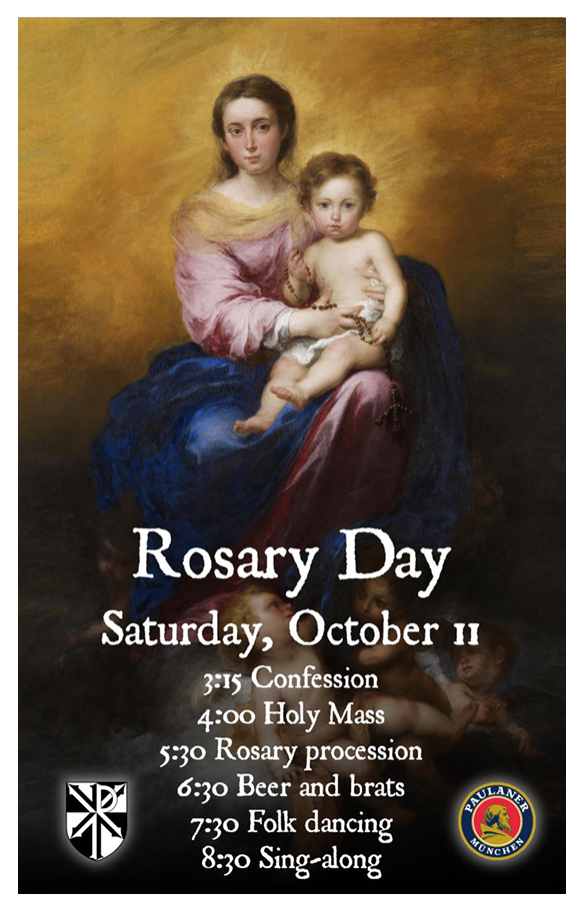
St. Anthony of Padua in Mount Holly will be celebrating the Feast of Our Lady of the Rosary this Saturday, October 11th beginning with Confessions at 3:15pm; Holy Mass at 4:00pm; followed by a Rosary Procession and festivities. Great fun for the whole family.
St. Anthony’s celebrates this fall festival each year in great style. This is one of the top four festivals hosted each year at St. Anthony’s. This year, in addition to blessing of the food, Father Bourbeau will kick off the festivities with a traditional and ceremonial blessing of the beer keg, from the Rituale Romanum, a blessing also known as the “Benedictio Cervisiae”.
The Feast of Our Lady of the Rosary, officially on Oct. 7th, is a memorial in the Roman Catholic Church that commemorates the 1571 Battle of Lepanto victory, which was attributed to the power of the Rosary. The feast, originally known as Our Lady of Victory, was established by Pope St. Pius V and later renamed to Our Lady of the Rosary by Pope Gregory XIII to emphasize the intercessory role of the Holy Rosary of the Blessed Virgin Mary.
Particularly considering the recent abandonment of the Diocese of Charlotte, the timing of this festival is timely.
More information can be found on the St. Anthony’s Facebook Page: https://www.facebook.com/SAPCarolinas or by emailing communications@saintanthonys.com.

St. Anthony of Padua, located at 108 Horseshoe Bend Beach Road, Mount Holly, NC 28120, is a chapel operated by the traditional Catholic Society of St. Pius X (SSPX).
https://charlottelatinmass.org/what-about-the-sspx/
GiveSendGo Fundraiser: Bread Not Stones Part 2

Dear Friends of the Charlotte Latin Mass Community,
Laudetur Iesus Christus! Please take a moment and consider the attached GiveSendGo fundraising campaign.
https://www.givesendgo.com/breadnotstones2
The documentary film Bread Not Stones, covering the Latin Mass situation in Charlotte, has more than 40,000 views since it was released only a few weeks ago. It has been featured on Catholic media channels world wide.
As the deadline for these masses in the Diocese of Charlotte approaches this week, your donation will help filmmaker Sean O’Halloran produce Part 2 of the Bread Not Stones project. All funding goes directly to his film studio for this project.
The new film will capture and document these historic and tragic moments in the history of the Diocese of Charlotte. The devastating impacts of Bishop Martin’s decision must be documented.
This project will not happen without your support. Please consider a financial gift according to your means.
God bless,
Charlotte Latin Mass Community
Announcement of Final Latin Masses
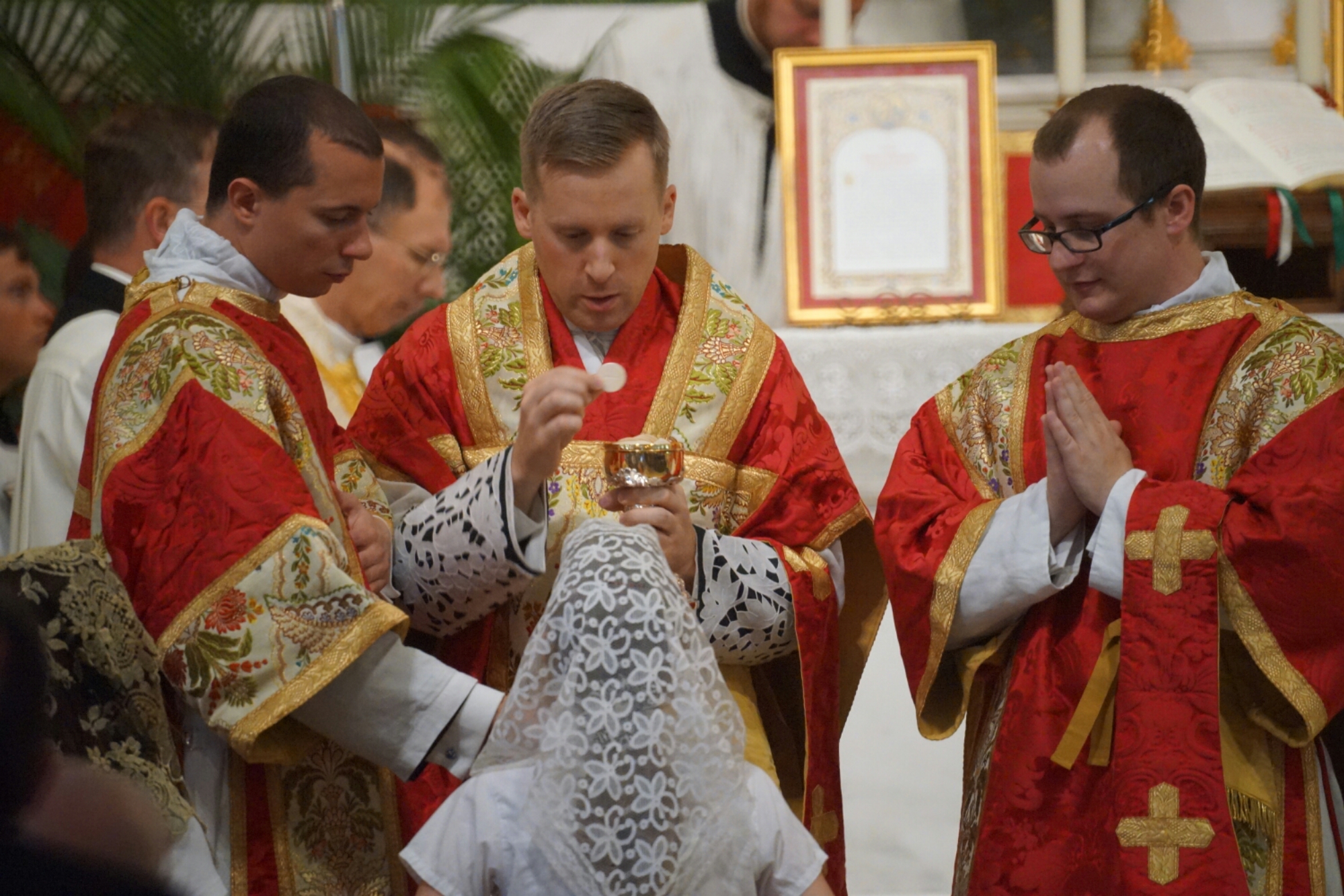
St. Ann Catholic Church:
Tonight, Wednesday, October 1st at 6:00pm will be the final Latin Mass at St. Ann Catholic Church in Charlotte. It will be a Solemn High Mass.
St. Thomas Aquinas Catholic Church:
Tomorrow, Wednesday, October 2nd at 7:00pm will be the final Latin Mass at St. Thomas Aquinas Catholic Church in Charlotte. It will be a Solemn High Mass.
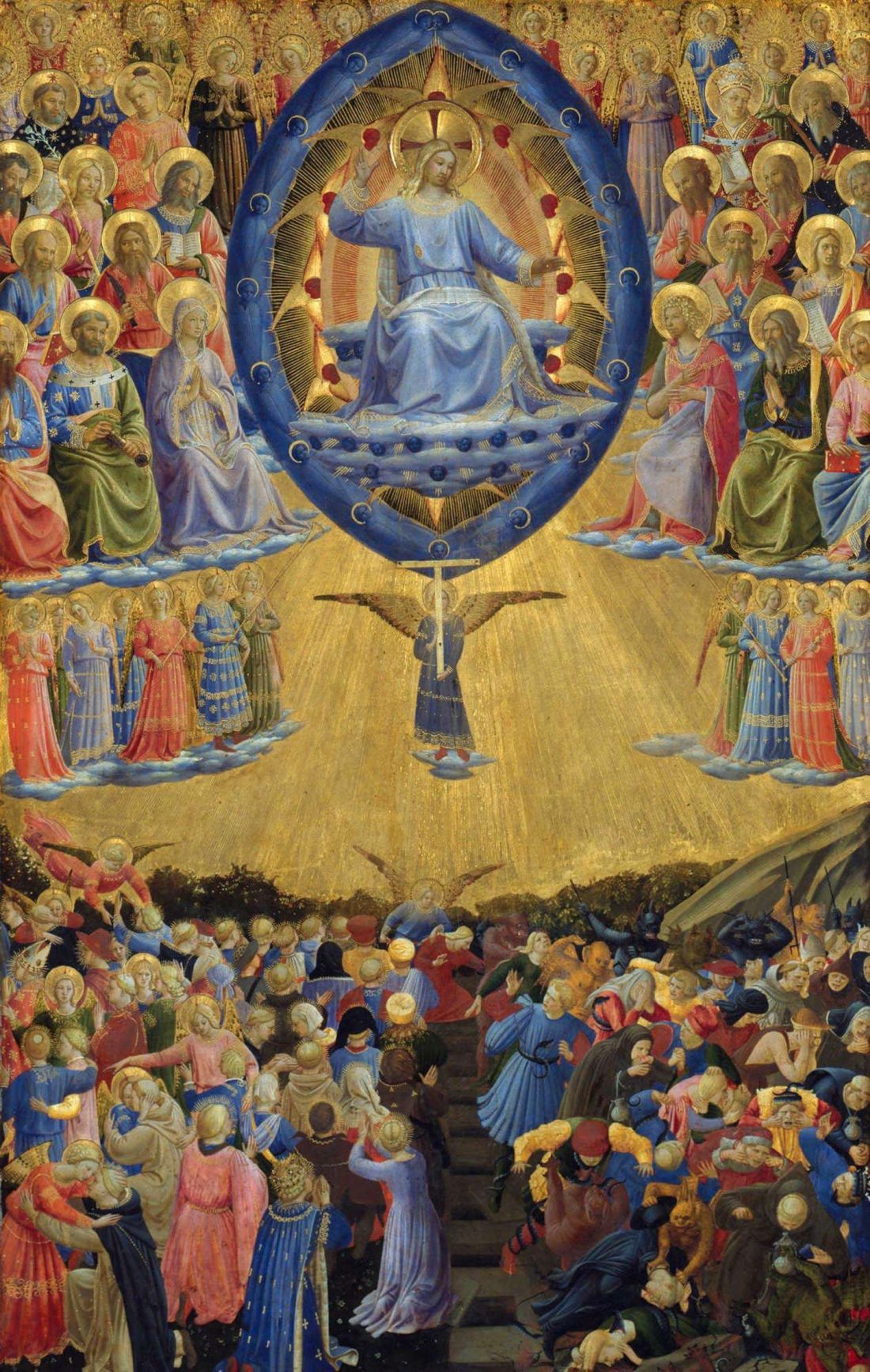
The most frequent question we have received is from people who can not figure out how this 2,000 year old Mass could be hated so passionately by some. How could something so beautiful be considered so controversial and divisive? The answer is found in the very center of this picture … it is Jesus Christ in the Eucharist.
The manner in which our blessed Lord is treated so reverently; that we kneel before the King of Kings; that we refuse to receive Him in the crude commonplace of our hands; that we do not speak the name of Jesus Christ using vulgar language … some are simply unable to tolerate such things.
As has been stated many times, the many ways in which this Mass of Ages has been persecuted, despised, suppressed, and cancelled for 2,000 years is the surest proof of it’s divine origin.
Rorate Exclusive: The Anti-Traditional and Anti-Liturgical Pastoral Letter to be Sent by the Bishop of Charlotte on Liturgical Norms in His Diocese
The above link is significant to the Diocese of Charlotte. We share it without any changes or emphasis added. The document speaks for itself.

